


Ecuador to Chile: Observations and Challenges of Transitioning
I could already see the walls slamming closed behind her eyes, eyes that were filled with look of confusion, maybe a little shock as she stared at the crazy gringa in front of the counter.
I explained again, “Si esto es mi equipaje; esta mochila y este bote. Yo sé que el bote es grande, pero también sé que va a caber.”
(Yes this is my luggage; this bag and this boat. I know that it is big but I also know it will fit).
“Lo siento señora pero no, no podemos permitirlo, no puede caber.”
(I am sorry but no, we cannot permit it, it will not fit).
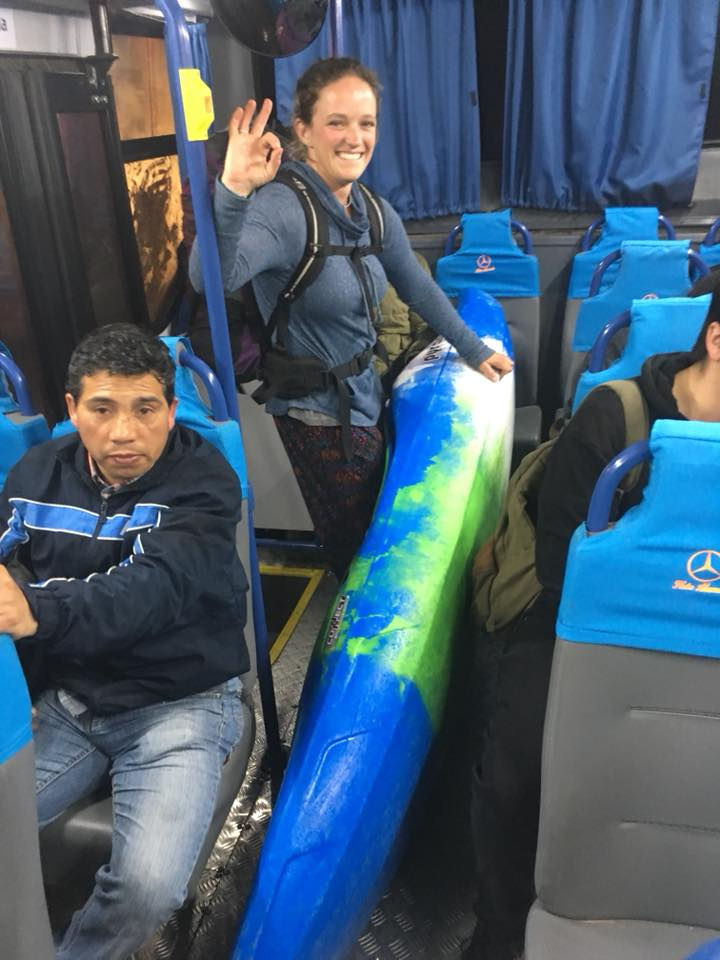
My heart was beating fast, this was my first time traveling a long distance with my kayak; I was alone, I was in uncharted territory, but I also really had no other choice. I took a deep breath, reminded myself that I am a strong, independent person, put a happy smile on my face and continued to politely explain to this confused bus ticket agent that I would be traveling from Guayaquil, Ecuador to Lima, Peru and that yes my kayak was coming with me. After about twenty minutes of confident, stubborn conversation she finally told me that she wasn’t promising anything but that I could at least take the kayak to the bus platform and talk to the driver.
Once on the platform, I repeated my smiling, polite arguments to the driver and finally, finally was allowed to put my boat in the cargo hold, which coincidentally was huge and my kayak fit very easily. Thus began a 32-hour international bus ride to Lima, followed by many conversations to get myself and my kayak on to taxis, friend’s cars, international flights, and city and national busses, until I finally arrived here in Pucón, Chile.

Although traveling by plane is more direct and faster, I much preferred the time I spent traveling by bus. It provided me with the opportunity to understand the physical and visual changes that exist in between the places I was visiting. One observation I made as I traveled between regions and countries was the changing relationship between roadside signs telling people not to throw trash or contaminate waterways and the amount of trash present. I began in the Amazon region of Ecuador where I had first observed these signs and where the amount of trash along rivers and roads was relatively low. Entering into the regions of southern Ecuador and northern Peru I saw the same signs next to huge banana plantations or large city centers where the water was filled with trash and sometimes had even become green with contamination. In contrast upon entering Pucón, I saw huge, artfully crafted billboards on the outskirts of a town with near to no trash on the roads or in the rivers.

As I transition from my time in Ecuador to my time here in Chile these kinds of observations have started my brain churning. What underlies these differences? Are they caused by income differences? By the types and amount of work available? Are there significantly different cultural or legal ideas about the environment? What impact might differences in geography have? Or maybe there are differences in the amount of immigration of people and ideas?
There are so many initial differences I see between Tena, Ecuador and Pucón, Chile and I cannot wait to delve into them and begin to find some level of understanding. I cannot wait to begin the same process of exploration and interviews in a place that is so different and will present new challenges.
¡Bienvenidos a Chile!


Comments